

Can You Wallpaper a Bathroom?
Yes, you can wallpaper a bathroom, and the old warning against it is well past its sell-by date. For twenty years the trade line was that humidity would wreck any paper you hung in here. Modern vinyl-faced wallpaper and most peel-and-stick lines simply don't fail that way anymore, as long as the wall is prepped properly and the room can clear its own steam. A papered bathroom has gone from risky to one of the most popular high-design moves in the house.
So this guide walks through when it works and when it doesn't, the materials that survive a humid room, how to prep and hang it, when a clear sealant earns its place near a splash zone, and how many years you can realistically expect.
Is It a Good Idea to Wallpaper a Bathroom?
For most of them, absolutely. Think of the papered bathrooms that really work and you'll almost always find the paper stopping at a tile backsplash or running up to a tiled shower surround, so it never takes water head-on.
The rooms where it's genuinely a bad idea tend to give themselves away. You flick the switch and there's no fan to hear, or the air still feels thick and close an hour after the last shower. Maybe it's a busy primary bath where several long showers a day stack up. Or one wall just takes direct spray. Leave those alone. Anywhere else, papering a bathroom is one of the highest-impact things you can do to a home, partly because it's often the smallest enclosed room in the house. Close the door. Now a bold pattern surrounds you on every side, a whole immersive scene instead of a timid accent.
So what actually goes wrong when it falls short? Nearly always it's humidity sitting above 80 percent for long stretches. Say the steam from your morning shower is still beading on the mirror at lunch. If your bathroom holds moisture for hours instead of minutes, the adhesive behind the paper ages quicker and the seams can start to lift early. You don't fix that with bare walls. You fix it with more airflow.
Where in the Bathroom You Can Wallpaper
Not every wall is fair game, so it helps to think in three tiers. They run from no-worry to no-go.
Always safe
Five spots in a bathroom are always safe to paper, beginning with the wall facing the shower. That's the accent most people land on, and it's a safe one. So is the wall behind the toilet. You can paper above the tub too, as long as there's a curtain or a door in front of it. The vanity wall works, around the mirror and up above it. And the ceiling? That's fair game once you switch to a stronger adhesive.
Borderline, fine with vinyl and good airflow
A few spots sit in a gray area, fine with vinyl and good airflow but asking a bit more of the paper. Above a tub with no shower in front of it is one. Behind the sink is another, provided you stop short of the splash zone. Powder rooms and half baths land here too, and they're the easier end of it (no shower in the room means humidity runs lower, and so does the risk).
Off-limits, unless you seal it
Three spots will defeat almost any paper unless it's protected behind glass or under a clear sealant: inside the shower, where direct water wins every time; the wet wall right behind the showerhead; and anything below the splash line behind a vessel sink or a tub faucet. (That's the band that ends up speckled with droplets.) In those places, plan on glass or varnish, or just leave them bare.
What Kind of Wallpaper Can You Use in a Bathroom?
In a humid room, the material matters far more than the hanging method. It's the face that decides how the paper copes with moisture. Don't write off the adhesive, though, because modern bathroom-rated pastes hold far better in damp air than the old starch-based stuff ever did.
Vinyl wallpaper
This is the gold standard. Drag your fingertips across a vinyl face and it feels slick and closed, a little like a shower curtain, which is exactly the point. It's non-porous, so a quick wipe gets it clean and moisture never really gets a grip. That's pretty much all a bathroom asks of a wall. Give it decent airflow and it'll hold for 15 to 25 years. Paste-the-wall vinyl counts here, and so does vinyl-faced peel-and-stick.
Vinyl-coated peel-and-stick
Most of the big peel-and-stick brands now run a bathroom-safe or waterproof line built for humid rooms. You get a coated face, and the adhesive behind it is rated for higher moisture. Hung peel-and-stick before? Then you already know the install. Plan on 5 to 10 years. That beats what a matte or fabric finish would give you in here, though it falls short of paste-the-wall vinyl.
Non-woven paste-the-wall with a vinyl topcoat
This is the top tier. Houses like Cole & Son and Phillip Jeffries sell non-woven substrates sealed under a vinyl topcoat, and it's a combination that handles damp rooms beautifully once a pro hangs it with the right paste.
What to skip
A few materials simply won't survive in here. Uncoated paper is first on the list. Within months it warps and begins to peel, and then small mold spots show up on top of that. Grasscloth and other natural fibers soak up moisture like a sponge (the stains they pick up are permanent). Matte or fabric-finish peel-and-stick simply has too little humidity tolerance to bother with. And hand-printed paper? It's far too precious and fragile for damp air. Keep it for a dry room.
How to Prep a Bathroom Wall for Wallpaper
Prep here is the same as any other room, with one extra move on the front end. Begin by washing the wall with a TSP substitute or a degreaser. Bathrooms quietly build up a film of soap, hair product and skin oil. You can't see it, but it will block the adhesive, and the wash strips it away.
Next, deal with any water-damaged drywall before you go further. Board that feels soft under your thumb, or that's stained or bubbled, has to come out and get patched.
Then prime. A mildew-resistant water-based primer like Zinsser Perma-White does the job, or you can reach for a bathroom-rated wallpaper primer. Our What Is Wallpaper Primer? guide has the full rundown. Let the primer cure a full 24 hours. (Yes, the whole day.) Finally, hang on a non-shower day, once the room has been dry for at least a day. If you've only got the one bathroom, that part takes a little planning.
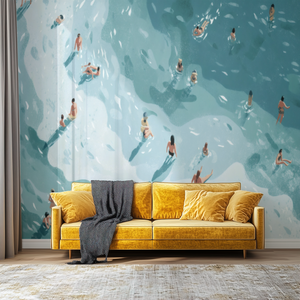
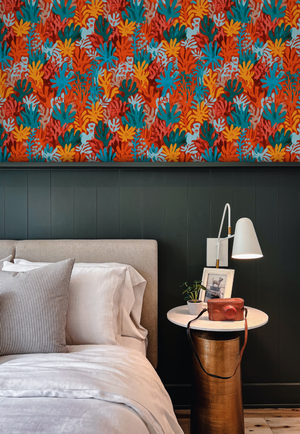
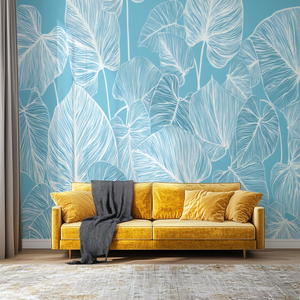
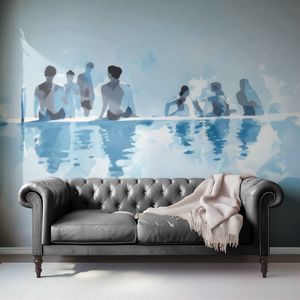
Sealing a Wallpaper Splash Zone with Clear Varnish
To push the paper closer to the sink, tub, or shower line, seal it with a clear varnish overcoat. That buys you several extra years. Over the hung paper, brush on two or three coats of a water-clear polyurethane or a water-based acrylic varnish, and the face is sealed against splashes. Over a decade it'll yellow a touch. When that happens, you can recoat it.
None of that replaces good airflow. What it does is let you put pattern in spots that would otherwise be a no-go. For the wettest zones, a glass overlay is the most durable answer. The brushed sealant is simply the cheaper one.
Will Wallpaper Stay Up in a Bathroom?
It will, given the right prep, the right material, and enough airflow. Put vinyl-faced paper on a primed wall in a room that vents well and it'll hold for 10 to 25 years, while peel-and-stick lasts 5 to 10.
So why do some jobs come down early? Nearly always it's one of a few things. Somebody rushed the prep. Or the material was never meant for a damp room, or the ventilation was too weak to clear the steam. On the wall, that shows up as one of two failures. Seam lift, where the edges at a join come away from the wall, comes from weak prep. Edge curl is what long humidity exposure does. Both are easy to head off.
Keeping it up comes down to small habits. The fan's the big one (you've heard that already), so leave it running through every shower and for fifteen minutes after, since ventilation does more for longevity than anything else. Every few weeks, run a dry microfiber across the face to clear the condensation. Then there's the seam that starts to go. Say one morning you spot a corner lifting, a sliver of curl you can just catch with a fingernail. Re-glue it within the week, while it's a two-minute fix, because left alone it turns into a spreading problem.
Should You Hire a Pro for Bathroom Wallpaper?
For peel-and-stick, a careful DIY job works in most rooms. A bathroom doesn't ask anything extra. You need what any peel-and-stick install needs, starting with clean prep. Smooth each strip with even pressure and keep the butt seams tight. Then take your time trimming.
Paste-the-wall vinyl is where paying someone makes sense. Why? Because in a humid room the adhesive choice changes. The prep runs deeper as well, and the corners get handled differently, and those differences are big enough that a first-timer tends to see seam trouble inside the first year. Labor for most pro jobs in the US runs $300 to $800 for an average room. The paper itself is on top of that.
Can You Use Peel-and-Stick Wallpaper in a Bathroom?
Yes, with a few caveats. The line itself should be bathroom-rated or vinyl-faced, not one of the matte or fabric finishes from the skip list above. It goes over primed eggshell or satin paint. And the room has to actually vent (yes, that fan again).
Get those right and plan on 5 to 10 years, compared with the 15 to 25 a paste-the-wall job would give you. That's the trade-off for a job you can do yourself. Our How to Apply Peel and Stick Wallpaper guide walks through the install, and How Long Does Wallpaper Last? gets into the lifespan math.
Bathroom Wallpaper Trends
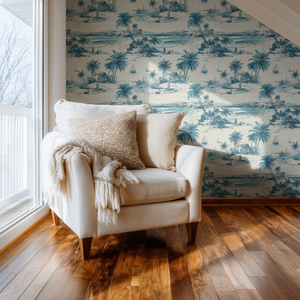
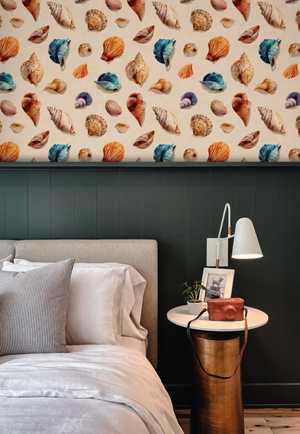
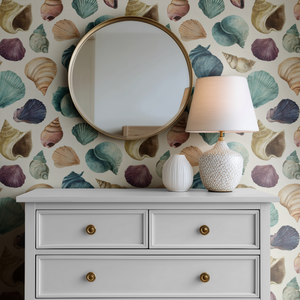
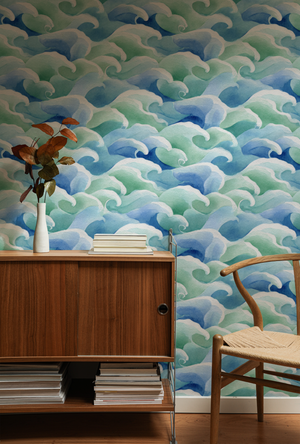
The 2020s revival in here is one of the clearer shifts in home design this decade. Flip through Architectural Digest or House Beautiful, or any of the big UK design titles, and you'll find a papered bath in nearly every issue. Usually it's a primary bath or a tiny powder room, where the visual punch lands hardest. So what's out front right now? Think moody florals on dark grounds, or blue-and-white toile. Oversized botanicals turn up often, and so do saturated single-color geometrics.
Two things shifted at once. The technology caught up, for a start, so today's vinyl-faced stock and bathroom-rated adhesives genuinely survive the conditions. And taste swung hard, with maximalist, pattern-forward rooms pushing aside the all-white default of the 2010s. The look is mainstream enough now that it's no longer a designer flex. Major builders even list a papered powder room as a standard option on stock plans.
Frequently Asked Questions
Is wallpaper a good idea for a bathroom?
For most, yes, and you can use wallpaper almost anywhere in the room that stays clear of direct water. Vinyl-faced paper copes with the humidity, and peel-and-stick does fine in a powder room or a bath that vents well. In a small closed room the payoff's hard to match. Just keep it off the shower walls and splash zones (or seal those with clear varnish if you want to chance it), and run the fan.
Can you wallpaper a bathroom ceiling?
Yes, and ceilings hold it well, sitting as they do above the splash zone and out of reach. Just use a stronger adhesive than you would on a wall. Our Can You Wallpaper a Ceiling? guide has the method.
Is wallpaper better than paint in a bathroom?
They play different roles. Paint is the safe default that bounces back from water easily, and wallpaper is the design statement that brings far more interest. In most homes the upkeep (running the fan, an occasional wipe-down) is minor next to what you gain visually.
How much wallpaper do I need for a bathroom?
Measure each wall you plan to cover, multiply width by height, and add it all up. Then tack on 15 percent for pattern-repeat waste, and expect most baths to need one to three single rolls, at about 28 square feet each. Buy every roll from the same production run, too. Our How to Measure for Wallpaper guide has the full method.
Our Take
Pattern in a bathroom is about the highest-impact, lowest-risk move in home interiors right now. The old ban on it was built on 1990s paper-and-paste, not on anything you'd buy today. Put a vinyl-faced design on a primed wall in a room that vents and it'll hold for 10 to 25 years. In a space this small, the visual return is tough to beat. So run the fan, and either skip the splash zone or seal it. When you're choosing, go with vinyl over paper. You'll be glad you did.
Last updated: May 2026.


