

Can You Wallpaper a Kitchen?
Yes, you can wallpaper a kitchen, and modern vinyl-faced wallpaper makes the installation much easier than it used to be. Kitchens face two challenges that bathrooms don't: heat near the range or stove, and grease in the air. The material you choose and where you put it in the space matters even more here than in a bathroom. A good kitchen wallpaper installation lasts 10 to 20 years and can shift the whole feel of the room.
This guide covers when kitchen wallpaper works, where to put it and where to avoid it, the best types to use, the backsplash question, how kitchen wallpaper compares to paint, and how to clean it once grease builds up.
Is Wallpaper in a Kitchen a Good Idea?
For most kitchens, yes. Open-concept layouts get the most out of it. When the cabinets run straight on into the living room, a strong pattern carries the kitchen visually into the next space instead of stopping dead at the counter. Breakfast nooks are a close second. If kitchen wallpaper does go wrong, it goes wrong in one of two ways, and both are easy to sidestep. Grease and steam are the slow one. They settle on the face until one evening you run a hand along the wall and feel the film. Heat is the other, from paper hung too close to the cooktop or stove (an oven wall counts too).
We'd tell two kinds of kitchen to wait. One belongs to a household that cooks heavy meals every day and can already see a grease film. The other has no range hood or vent fan. Even in a kitchen that passes, leave alone any wall that takes direct splatter from the stove, and the one behind a sink without a backsplash. None of that sounds like yours? You're in the clear.
Wallpaper vs Paint in a Kitchen
Paint is the default for kitchen walls because it is cheap, easy to refresh, and easy to clean. A splash of tomato sauce comes off a painted wall in one swipe, and when the room looks tired you roll on another coat. Wallpaper does a different job. It's what makes a kitchen that simply works look like somebody designed it. You don't have to choose, and most people don't. Walk into a wallpapered kitchen and you'll usually find paint on the trim and doors, and on the wall that takes direct splatter. The paper goes on the feature walls (in an eat-in kitchen, maybe the nook wall and the ceiling over the island). That split is pretty much the standard high-design kitchen spec now, and it's the one we'd pick.
Where in the Kitchen You Can Wallpaper
You can wallpaper most kitchen walls, just not the ones right behind the stove or behind a sink with no backsplash. The farther a wall sits from the heat and the splash, the safer it is for kitchen wallpaper.
Always safe
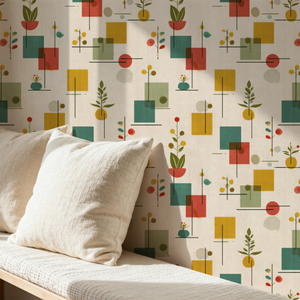
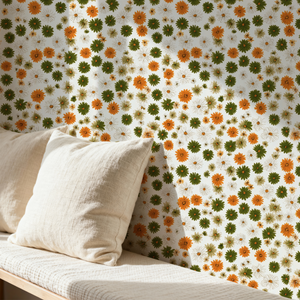
Breakfast nooks and banquette walls are easy wins. So is the dining-side face of the wall behind a kitchen island, and the wall opposite the range or stove on the eat-in or seating side. Pantries are fair game, and so is a broom closet or any other enclosed storage. You can also wallpaper the wall under the upper cabinets if no splatter reaches it, or the ceiling, especially above a kitchen island.
Borderline (with vinyl wallpaper and good airflow)
These can work, but only if it's vinyl wallpaper and the kitchen moves air well. Think of the wall above a low backsplash where the hood reaches the splatter zone, or the wall around the fridge and pantry doors. The wall behind a sink belongs on this list too, provided there's a tall backsplash already in place.
Never wallpaper
Right behind the range or stove is out, since heat damage there is a given. So is the backsplash itself, unless a glass overlay or heavy sealant protects the wallpaper (more on both below), and the splash zone behind a sink with no tile or stone backsplash. And inside an oven. That shouldn't need saying.
What Type of Wallpaper Is Best for Kitchens?
Vinyl wallpaper
Vinyl wallpaper is the right pick for any kitchen. Run a fingertip over the face and it feels smooth and slightly slick, because it's non-porous. Grease drifting over from the stove just sits on top until a damp microfiber with mild dish soap takes it off, probably the way you already clean your cabinets. Steam and heat don't bother it. With daily cooking it still lasts 15 to 25 years.
Vinyl-coated peel-and-stick wallpaper
Vinyl-coated peel-and-stick wallpaper works in most kitchens. Renters should look here first, and so should anyone hanging the paper on their own, since it's a solid second-best. You get the same wipe-clean vinyl face, so grease and steam aren't really the problem. The adhesive is. After a few years of kitchen humidity it lets go sooner than paste-the-wall vinyl would, which is why we'd budget 5 to 10 years of installation life for it, not 15 to 25.
Avoid in kitchens
Uncoated paper is a clear no, since grease soaks in for good. Grasscloth is gorgeous, but its weave traps grease and no scrubbing gets it back out (other natural fibers are the same). Matte peel-and-stick resists grease poorly. And hand-printed paper? One spatter from the frying pan a few feet away can ruin a precious panel.

Can You Use Wallpaper as a Kitchen Backsplash?
Only with cover. Bare paper put straight onto the backsplash will fail in under a year. That strip between the counter and the upper cabinets takes more grease and splash than any other wall in the house, with the stove's heat on top.
If you still want one, you have two options.
Clear glass overlay
A clear glass overlay is a pane of tempered glass cut to fit the backsplash and set over the wallpaper. The paper is sandwiched behind it, so the pattern shows through and nothing from the pan reaches it. It's the version pros install most often. Expect $300 to $1,500, depending on size and glass thickness.
Heavy-duty clear sealant
A heavy-duty clear sealant is many coats of a clear polyurethane sealant brushed over the installed wallpaper. It costs less than glass, which is the main argument for it. Over time the sealant yellows, and it never wipes down as easily as a glass panel. We'd keep it for rentals and light-cooking homes.
In most kitchens, though, we'd skip the question. Paper every wall but the backsplash and give the cooking zone to standard tile (stone or stainless steel works too). Paint on the trim and doors ties the room together.
How to Clean Kitchen Wallpaper
Vinyl-faced kitchen wallpaper cleans the same way you clean your cabinets. Stir a few drops of mild dish soap (Dawn or similar) into a bowl of warm water and dampen a microfiber cloth in it. Start at the top. Working down in even strokes means any drip lands on wall you haven't reached yet. Rinse the cloth out and make a second pass with plain warm water so no soap film stays behind. A separate clean microfiber dries it off.
When the wall above the stove turns tacky, bleach looks like the fix. It isn't. It can damage the vinyl topcoat or the printed pattern, and ammonia-based glass cleaners can too. Citrus degreasers as well. For a grease spot that won't budge, our How to Clean Wallpaper guide has the full method.
How Long Does Kitchen Wallpaper Last?
Lifespan depends on the wallpaper type and how often you cook. Paste-the-wall vinyl goes the distance, 15 to 25 years in a normal kitchen, with non-woven wallpaper under a vinyl topcoat close behind at 10 to 20. Vinyl-coated peel-and-stick gets 5 to 10 years, and by now you know why (the glue). Uncoated paper or fabric wallpaper is the short-lived one. Stains set in after 2 to 5 years.
The range hood decides a lot of where you land. Take two kitchens with the same paste-the-wall vinyl, both cooked in daily. Where the hood runs through every meal, the paper should reach the high end of its 15 to 25 years. With no vent fan, expect the low end.
Should You Hire a Pro for Kitchen Wallpaper?
For peel-and-stick, a careful DIY installation works. The steps are the same as any peel-and-stick job: prep, plumb, hang, smooth, and trim. See our How to Apply Peel and Stick Wallpaper guide for the full method.
Paste-the-wall vinyl around cabinets, soffits, and recessed lights is a different story. There, a pro installation is worth the cost. Kitchen walls just have more obstacles than bedroom walls, and every outlet, switch, run of undercabinet trim or vent hood is a spot where a beginner can leave a visible flaw. In the United States, pro labor for a kitchen wallpaper installation runs $400 to $1,200.
Kitchen Wallpaper Trends
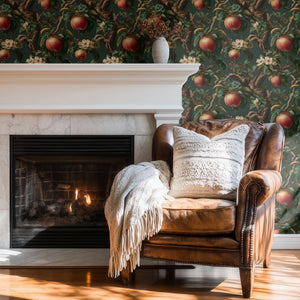
Kitchen wallpaper has shifted from a 1990s memory to a current-day comeback. In fresh home projects the top spots are clear. Above the upper cabinets is one, where grease and dust stay low. A breakfast nook is another, with the wallpaper marking off the dining space. Some go bold on the ceiling above an island, and plenty wallpaper the inside of a pantry or butler's pantry, since it's closed off and lower traffic.
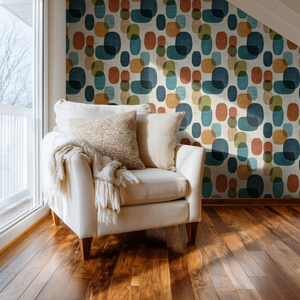
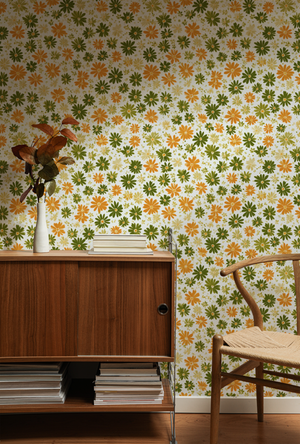
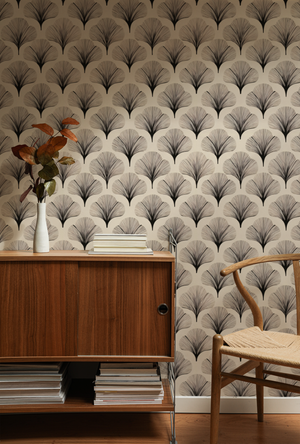
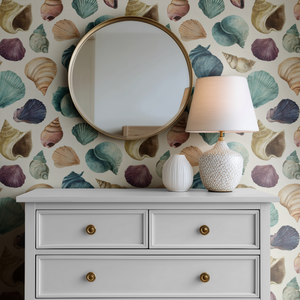
The patterns moving the most are botanicals, lemon and citrus florals (always a kitchen favorite), checkerboard geometrics, and toile in blue or sage. And wallpaper with tile isn't a rare choice anymore. It's standard high-design spec, with kitchen wallpaper covering most of the wall and a clean tile backsplash guarding the cooking zone. Paint on the trim and cabinet doors completes the look.
Frequently Asked Questions
What is the best wall covering for a kitchen?
For non-cooking walls, vinyl wallpaper or vinyl-coated peel-and-stick. At the backsplash, use tile (natural stone or stainless steel also work), and leave the trim and cabinet doors to paint. Together the three give you the best mix of style and durability.
Can you use peel-and-stick wallpaper in a kitchen?
Yes, with vinyl-coated peel-and-stick only. The standard matte or fabric-finish kinds won't make it past a few years in there. On primed walls, with the range hood running while you cook, the vinyl-coated version gives you 5 to 10 years of service.
Can you wallpaper kitchen cabinets?
Yes. Covering cabinet doors (or the insides) with vinyl-coated peel-and-stick is a popular budget refresh. Sand the face lightly so it grips, then press it on with a smoothing tool. Doors get handled daily and last 3 to 7 years, while inside faces you rarely touch go longer.
How do you wallpaper around kitchen outlets and switches?
Cut the wallpaper to overlap the outlet by half an inch. Press it into place and run a sharp utility knife around the outlet box until the edge sits flush. A switch is the same job. For the full obstacle-cutting method, see our How to Hang Wallpaper guide.
Our Take
Kitchens are wallpaper-ready. Modern vinyl-faced wallpaper handles the grease and steam that beat the 1990s product, and the visual return on a wallpapered kitchen is big. Nervous? Start where nothing splashes, like the breakfast nook. Our one caveat is to keep kitchen wallpaper off the range and stove walls. If you want pattern at the backsplash, use a glass overlay or tile. Wipe the face monthly. The 15-year minimum lifespan of vinyl kitchen wallpaper is longer than most owners stay in one home anyway.
Last updated: May 2026.


