

Is Wallpaper Back in Style?
Short version: yes, wallpaper is back in style, and it isn't a quiet comeback either. The stripped-back, all-white Pinterest look that owned the 2010s has handed the room over to pattern, color, and depth. Designers say so. The shelter magazines say so. Even homeowner surveys say so. Nothing about 2026 suggests it's slowing down.
Below, I'll get into what's actually driving the revival, the trends worth knowing for 2026, the looks that have aged out, where people are really putting it, the resale question everyone asks, and the handful of patterns that never seem to date.
Is Wallpaper Back in Style in 2026?
Yes, and the people who track this for a living are blunt about it. Writing in Apartment Therapy's "I Asked 5 Designers What Wallpaper Trends Are Out for 2026, and They All Agreed", Kelsey Mulvey puts it simply: "it's safe to say that wallpaper is here to stay." Over in the UK, Luke Arthur Wells' December 2025 Livingetc piece "I'm Predicting These 7 Wallpaper Trends Will Be the Most Popular Ways to Decorate in 2026" quotes designer Jamie Watkins of Divine Savages, who goes further: "pattern is no longer the supporting act; it's the main event."
The numbers back the designers up. Since 2020, searches have climbed for installing it and for trends, and for removable rolls and the wall mural too. Lay the designer surveys next to the magazine forecasts and the retailer sales reports and they all point the same way. So is this still an open question? Not really. At this point it's a category, not a fad.
Why Wallpaper Is Trending Again
A few things lined up at once.
The tech changed first. Peel-and-stick made hanging it genuinely easy for renters and nervous first-timers, the very people who'd have looked at a paste bucket ten years ago and decided to just paint. Non-woven paste-the-wall did the same for permanent jobs. It's faster than the old way and far less messy, since the paste goes on the wall instead of on a dripping strip. Between the two, the friction that kept patterned walls a designer-only luxury disappeared.
Then the design pendulum swung. That all-white, all-greige "modern farmhouse" run from 2014 to 2020 simply wore out its welcome. People wanted color and personality back in their homes, and nothing gets you there as fast as a patterned wall.
Social media helped too. Instagram and TikTok reward depth and drama, so a papered powder room (or one scenic panel behind a headboard) looks far better on a phone screen than flat paint ever will. It's the same algorithm that made dark green kitchens go viral, and it dragged patterned walls along for the ride.
And heritage came back around. Toile and chinoiserie, damask, the traditional florals people once dismissed as "grandmillennial," all of it now comes up in serious design conversations. Younger buyers are picking the patterns their grandmothers had, just in new colorways, and they're doing it with a straight face.
What Wallpaper Trends Are In for 2026
A few clear themes are running the conversation this year.
Texture is the headline, and you feel it first. Run a palm along a grasscloth bedroom wall at night and the weave catches the lamp. Sisal does too. Linen-look papers are quieter, as are faux plaster and embossed finishes. Nobody's looking at the print. It forgives minor wall flaws, which we'll take.
Florals have gone big and painterly. Blow a hand-drawn botanical up well past the dainty mid-century repeat and a dining room wall reads closer to framed botanical art than to anything your aunt had in 1985. Our pick for that room, where people actually sit and look.
Then there's the panoramic scene, and it's everywhere. Walk a hallway papered in one and the pattern never starts over, since it's one image the whole way. A garden, maybe. Or a landscape. A range of mountains, even. Nearly every boutique brand now has a custom-printed mural in its standard catalog, so yes, it's mainstream.
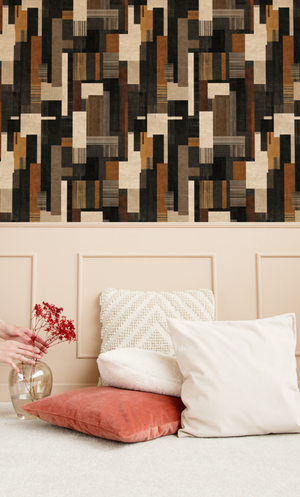
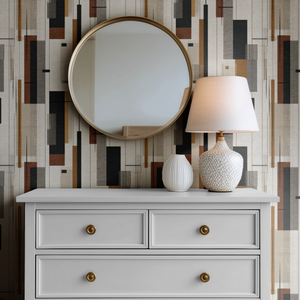
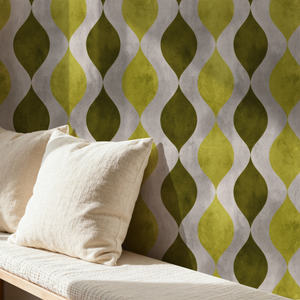
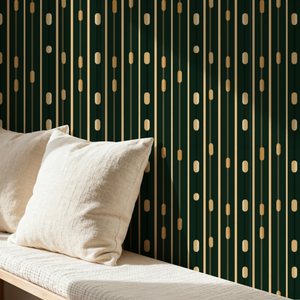
Color has gone earthy. Mossy green behind open kitchen shelves. Terracotta in the hall, or ochre. Deep mineral blue for a bedroom you mostly see after dark. Grounded palettes, rooted rather than chased, and the easiest of this year's trends to live with.
Heritage motifs are turning up in colors you wouldn't expect. We like this best in a powder room: an old toile landscape, rescaled and recolored until it's almost cheeky. Chinoiserie scenes get the same treatment. So do neoclassical damasks.
And the ceiling is having a moment. Lie back under a papered bedroom ceiling and the room pulls in close. The high-end interior magazines show this so-called fifth wall in powder rooms and dining rooms too, usually in a pattern that complements the walls rather than copying them. Copy them and you've built a gift box.
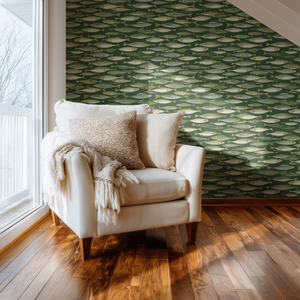
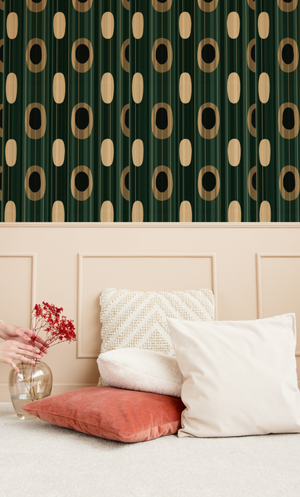
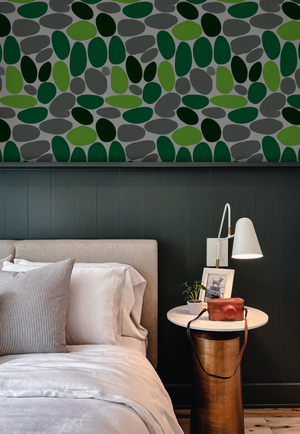
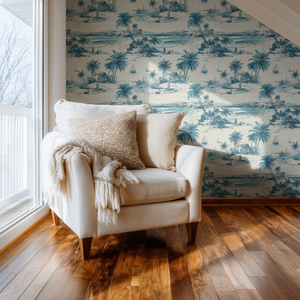
What Wallpaper Trends Are Out for 2026
A handful of looks that defined the last cycle are clearly past their peak in 2026.
Some rooms you can date from the doorway. A living room in faux concrete gives it away, that whole industrial cement-look family, the Brooklyn-loft thing from 2015. It's dated hard, and faux distressed brick and faux plywood went down with it (nobody's mourning the plywood).
Down the hall, a bedroom in timid tone-on-tone texture, the "I want a little something but no real commitment" choice, reads as indecision now. So do the mid-2010s beiges and greiges. A wall that whispers "please don't notice me" is out of step, and misses the point.
The powder room finishes the tour. Ironic millennial pink-on-black has run its course, and the tropical leaf print (that Pinterest-soaked banana leaf) is well past it. So is the hand-lettered quote over the sink, inspirational typography that felt fresh around 2018. The brass-and-marble geometric Art Deco revival? Quietly settled into one option among many rather than the look everyone copies.
Where Are Homeowners Actually Using Wallpaper?
The smart 2026 move is targeted. One spot done well beats a whole house drowning in pattern.
Powder rooms are far and away the most popular spot. It's a tiny footprint with a big payoff and almost no risk. Next comes the wall behind the bed. Usually that's the headboard wall, though sometimes it's a single scenic panel that frames the whole thing.
Kitchens get feature walls, especially along open-shelving runs and in breakfast nooks, plus the backsplash zone when there's no tile yet. Nurseries and kids' rooms are their own story, a category that exploded once removable peel-and-stick arrived. A soft botanical scene behind the crib has been one of the most photographed nursery looks of the past two years.
Dining rooms often get a papered ceiling for extra depth, or a wraparound landscape that makes the room feel like somewhere else entirely. In hallways and stairwells, the long sightline rewards a strong pattern or a scene that pulls your eye down the corridor. And the home office? Now that the wall behind you shows up every time you join a video call, it's a design decision whether you like it or not. A botanical or abstract backdrop is the usual pick.
A few rooms still earn skepticism. Right behind the stove you're up against heat and grease. A bathroom with poor airflow holds humidity, and basements tend to be damp and dim. Skip any wall whose surface is already in rough shape, too.
Does Wallpaper Devalue a Home?
Back in 2010 the answer was a flat yes. A buyer would walk in, see a papered dining room and quietly add a weekend of scraping to the price, so it dragged on resale. That view has genuinely shifted.
The current take from the trade, captured by the National Association of REALTORS' "Wallpaper Trends That May Actually Help You Sell Your Home", is that smart use can actually help a sale. One accent wall or one scenic panel, or a single well-chosen room (a guest bath, a powder room, a small office), reads as intent and personality. It doesn't look like a project waiting for the next owner.
What still drags on resale is pattern in too many rooms at once. Of-the-moment prints that'll look stale in three years hurt too, and so does old vinyl that's lifting or yellowed, or anything in poor condition. The buyer's question has quietly changed. It used to be "is there wallpaper." Now it's "how much work is this going to be."
So say you want it, but the resale voice in your head won't quiet down. Pick rooms that are easy to undo, and patterns that lean classic rather than trendy. That's the whole trick.
What Wallpaper Patterns Never Go Out of Style?
A few types have shrugged off every trend cycle thrown at them. Decades in steady rotation, and they'll probably stay put.
Grasscloth leads the list. That natural-fiber texture has been a staple for decades, and it slots into a modern room as easily as a traditional one (transitional and minimalist rooms too). It's about as close to timeless as a wall covering gets. Plain textured papers like linen-look and sisal belong in the same camp.
Toile de Jouy is right behind it. The single-color landscape print was born in 18th-century France and has ridden through every major trend without losing its footing. Hang it in forest green or charcoal and it reads completely current, centuries old or not.
Stripes never date. Wide or narrow, painted or fabric-look, they've been on walls about as long as walls have had coverings. Subtle damask belongs here too, the tone-on-tone kind that keeps the shape without the loud Victorian volume.
Botanical illustration reads fresh in any decade. You know the look: true-to-life plant studies that echo the 19th-century natural history plates. A classical or chinoiserie landscape scene holds up just as well, and it's one of the oldest formats going. Grand interiors have featured it since the 1700s, and it's still one of the most reliably fashionable.
Frequently Asked Questions
Is wallpaper still in style in 2026?
Very much so. It sits near a high point now, with the forecasts and designer surveys backing up the retailer numbers. Where to start? Grasscloth, if you ask us, though oversized florals and the panoramic mural pull hard too, and so does a heritage motif in a modern color.
What are the current trends in wallpaper?
Textured grasscloth and linen-look papers. Then big painterly florals, and murals that run one scene across a whole wall. The palettes run earthy, moss and terracotta or a mineral blue. Toile is back in new colors, chinoiserie and damask too. Oh, and the ceiling, papered as a "fifth wall."
Why is wallpaper trending again?
Four reasons, mostly. Peel-and-stick took the fear out of it for renters and first-timers, and the all-white farmhouse run of 2014 to 2020 wore people out. Social media helped (a scenic wall photographs better than paint). Last, a younger crowd is hanging their grandparents' heritage patterns with a straight face.
Where should I put wallpaper in my home?
The popular 2026 spots are powder rooms, the wall behind a bed, a dining room ceiling, nurseries, a kitchen feature wall, hallways, and home offices. We'd skip two places, though: right above the stove, and any bathroom where the air never really moves.
Our Take
The real question was never whether wallpaper is back. It's how to use it without overdoing it, and the 2026 answer is restraint. One room is plenty. Even one wall or a ceiling will do, if you chose it on purpose and not off a trend roundup (ours included). For the first time in a long while, the resale conversation is on your side.
First time? I'd start with a powder room or one bedroom accent wall. It's small enough that a wrong pick costs a weekend, not a renovation, and it shows you how a pattern lives in your light and your space. Look at it over morning coffee, then under a lamp at night (a different wall by then) before committing to more. Our guide on Peel and Stick vs Traditional Wallpaper walks through which install type suits which room. Already know the look you're after? Then just browse our patterns.
Last updated: May 2026.


