

Does Peel and Stick Wallpaper Damage Walls?
Short answer: applied and removed correctly, peel and stick wallpaper does not damage walls. Those two qualifiers carry most of the weight, though. Damage tends to come from one of four causes, and three of them are easy to head off before they ever happen.
Peel and stick wallpaper, also called removable or self-adhesive wallpaper, is designed to peel off painted walls cleanly. With its easy application and removal and a wide range of designs, peel and stick wallpaper is perfect for temporary decor changes, which makes it an ideal choice for renters and homeowners alike who want customization without the long-term commitment of traditional wallpaper. That removability is the whole appeal. The damage worry is real, but narrower than the internet makes it sound.
So this guide covers what actually counts as damage, the four factors that decide whether your peel and stick wallpaper installation leaves a mark, how applying peel and stick wallpaper without storing up trouble for later works, and how the removal process goes when you're ready for a new look.
Does Peel and Stick Wallpaper Damage Walls?
In most cases, no. It's built to come off a painted wall cleanly. The pressure-sensitive adhesive holds on firmly while the strip is up, then lets go without residue when you pull it back at the right angle. That clean exit is exactly why renters reach for it when they want a fresh look without putting the security deposit at risk, and why plenty of homeowners pick it over traditional wallpaper they'd be locked into for years. You get to personalize the room without the strings of a permanent install.
Ask people who've actually lived with it, though, and the honest answer is "it depends." Apartment Therapy, in "Does Peel and Stick Wallpaper Damage Walls?", puts it plainly: temporary wallpaper "may pull off paint with a flat or matte finish" when you take it off. Most installs come down cleanly. A minority don't.
The ones that don't tend to cluster around four things: how cured the paint is, what sheen it has, what shape the drywall is in, and how you take the strips down. Get all four right and you won't see damage. Miss one and you might.
For perspective, it's far gentler on a wall than traditional wallpaper. A traditional wallpaper installation goes up with wet paste (wallpaper paste) that cures right into the surface, which is why getting it off turns into scoring and soaking and then scraping. Peel and stick wallpaper just pulls away at a 45-degree angle, because the bond is lighter by design. It's made to lift without leaving residue, and that clean removal is what it's known for.
Factor 1: Paint Cure Time
The single biggest reason paint pulls off with a strip is hanging it over paint that hasn't fully cured. Latex feels dry to the touch in an hour and you can recoat it in four, but full cure, the point where it reaches its final hardness and bond, takes weeks.
That's why the makers, including Tempaper's "Frequently Asked Questions" page, tell you to wait at least 30 days after fresh paint before you hang anything. During those weeks the paint is still off-gassing moisture as it cures. Lay wallpaper over it early and you trap that moisture against the wall, where it weakens the paint's grip on the drywall. Then, whenever you peel the strip off later, the paint is that much more likely to lift with it.
So if you've just painted, wait. And if you didn't do the painting and have no idea when it last happened? Assume it's been long enough for ordinary home use.
Factor 2: Paint Sheen
Sheen decides two things at once: whether the strip bonds at all, and how cleanly it comes back off. Eggshell or satin paint over walls that were properly primed and painted gives you the best adhesion and the cleanest removal. Run a hand across either and it feels a touch slick, yet they still grip and release well. Semi-gloss and gloss are the weak link. On those, peel and stick wallpaper may not adhere well and can start lifting on its own within weeks. Oddly, if it does hold, removal tends to be clean, precisely because the grip was light to begin with. But a bit of vinyl wallpaper over the wrong sheen simply won't last.
Got a semi-gloss or gloss wall? Then this isn't the right format for it. You can repaint in eggshell or satin first, or move to a non-woven traditional wallpaper that bonds into the surface with wet glue.
Factor 3: Drywall Condition and Wall Texture
The real fear here isn't paint pull. It's the drywall paper tearing. Standard drywall has a paper face, and when the adhesive grips harder than that face is bonded to the board, the paper comes away on the back of your strip. It's rare.
When it does happen, the wall usually has a history. A builder may have painted drywall that was never properly primed, a common shortcut. Whoever lived there before might have stripped old wallpaper off roughly and left the surface weak. Older drywall can also delaminate from its gypsum core, and then there's water. Water damage can soften the paper, and so can the steady humidity of a bathroom with no vent.
Any one of those makes the risk genuine. A tear exposes the gray gypsum core, and that means spackle and sanding before primer and paint, at least 30 minutes a spot (plus the fuss of matching the color around it).
Since you can't always know a wall's past, we'd never skip the sample test. Leave a 4-by-4-inch piece up for 48 hours. If it lifts cleanly, the rest of the wall will too. A bathroom, or any surface that sees humidity, needs a longer trial, ideally a full week, because the bond shifts once the humidity has cycled through.
Smooth walls vs textured walls
Peel and stick wallpaper is designed for smooth walls, where cured eggshell or satin paint gives an even bond and a clean pull. Drag your palm across a textured wall and you'll feel the problem. The adhesive only touches the high points. The valleys get nothing. Over time that shows up as air bubbles, then curling edges, and the eventual removal comes off patchy and can drag the texture and finish loose. The exact profile matters. A light orange peel texture is workable. Knockdown isn't, and neither is popcorn or stucco. If your walls are textured and you've got your heart set on it anyway, our guide on Can You Put Wallpaper on Textured Walls? walks through prep options like skim coating and lining paper.
Factor 4: Removal Technique
Removable wallpaper comes off cleanly when you pull slowly, at a 45-degree angle, in one smooth motion, and most removal damage comes from breaking one of those three rules. The angle is the big one. Pull straight out at 90 degrees and all the force lands on one small spot, which is the likeliest way to bring paint or drywall paper away with the strip. Rush it and the adhesive never gets the chance to release, so the strip either tears or clings harder than it should. Stop-start tugging? Every restart sets up a fresh stress point.
Done right, it's a calm job. Lift one corner and peel back about six inches at 45 degrees. That first bit is a test (watch the wall, not the paper). If the paint stays put, carry on down the strip in one steady pull at the same angle. A whole wall takes 10 to 15 minutes. Feel it grab halfway down? Stop. A hair dryer on low for 30 seconds softens the adhesive without doing anything to the wall, and then you try again.
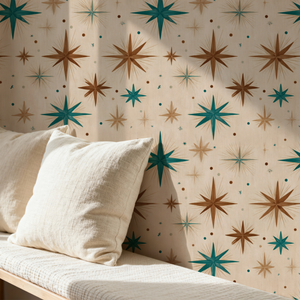
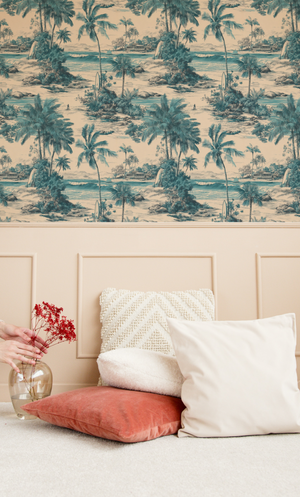
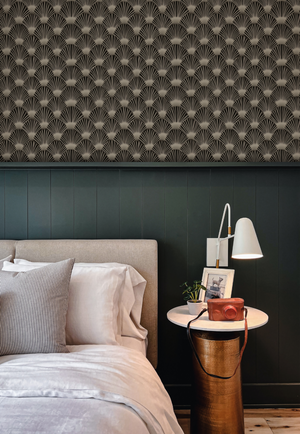
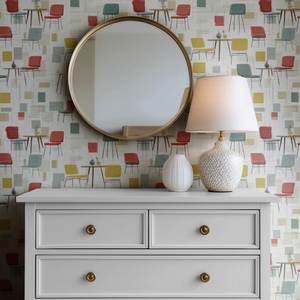
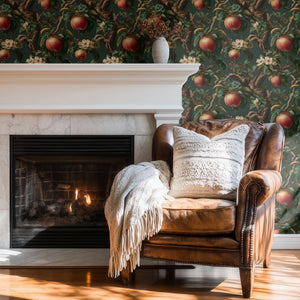

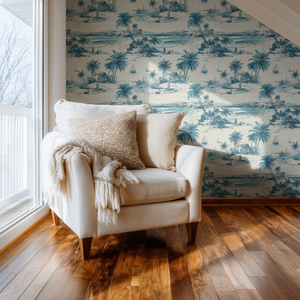
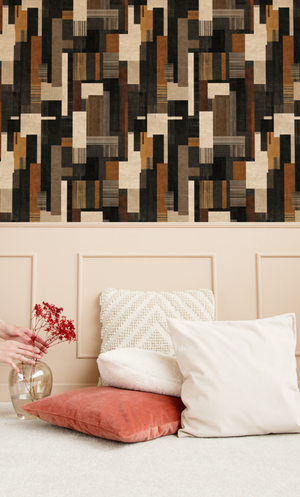
What Counts as Wall Damage from Removable Wallpaper
There are really three kinds, from mildest to worst. The most common is adhesive residue, a thin sticky film you can feel under your fingertips that wipes off with soapy water in minutes. That barely counts as damage. A step up is paint pulled off in spots, where removal lifts a few patches. It's cosmetic, and you touch it up with the original color and a small brush in maybe 15 to 30 minutes. The rarest and worst is a drywall paper tear that exposes the gypsum core, which means spackle and sanding before priming and repainting, 30 to 60 minutes plus drying time. When people say peel and stick wallpaper "damaged" their walls, it's usually that middle one, the bit of lifted paint, they mean.
What Makers Like Tempaper Say About Wall Damage
Top-brand peel and stick wallpaper is built for clean removal that leaves walls intact, provided the surface was prepped right. The Tempaper "Frequently Asked Questions" page is clear about the rules. Install only on smooth surfaces "primed and painted with an eggshell, satin or semi-gloss paint," and wait "at least 30 days after painting" before you start. Hang it under those conditions and the removable wallpaper comes off without residue and without taking paint with it. Put it over flat or matte paint, over texture rougher than an orange-peel finish, or onto paint that hasn't cured, and you may be doing touch-ups after removal. Which tells you the damage risk is almost entirely about wall prep. It's not the product.
How to Apply Peel and Stick Wallpaper Without Damage Down the Line
Most damage traces back to install choices made months earlier, so a careful application is what saves you the headache later. The first try goes fine for most installs. The rest comes down to small habits.
Work each strip from the center out. A trapped air bubble concentrates stress on the adhesive, and that's how edge lift gets its head start. Don't stretch a strip as you hang it, either. Peel-and-stick has a little give, and if you pull it tight it'll tug back at the edges over the next day. Hold it by the printed face, not the sticky back, because the oils on your skin weaken the bond (easy to forget halfway up a ladder).
Then there's the room. If you're papering a spare room that's sat unheated all winter, bring it up into the 65-to-75-degree range first. Much below 50, or above 85, the adhesive struggles.
None of that is a limit of the material. They're habits. Put it up with a little care and you'll get a wallpaper installation that lasts for years and still comes off clean, which is why we'd call careful application the whole game. Get it right and the removal looks after itself.
How to Remove Peel and Stick Wallpaper Cleanly
Removal is far simpler than it is with traditional wallpaper, but the steps still matter, and done right they sidestep every kind of wall damage. Start at an upper corner. A fingernail usually gets under the edge, and if it won't, a thin plastic putty knife will. From there it's the same slow 45-degree angle from Factor 4, eyes on the wall rather than the strip.
If a fleck of paint comes away, stop. Change the angle or add heat; a hair dryer on low softens the adhesive on the stubborn stretches so you need less force to pull. As the strip comes down, roll it up in your other hand. Left loose, it flops back and grabs itself, or worse, the wall you just cleared.
Once the wall's bare, wipe it with a damp cloth to lift any residue, and let it dry before you paint or hang anything new.
How to Fix Damage After Removal
If something does go wrong, the repairs are minor and firmly DIY. Sticky residue is the easy one. Mist it with a 50/50 mix of vinegar and water and leave it five minutes. It wipes clean.
Paint that pulled in spots needs patience more than skill. Sand the bare patch lightly to feather its edges. Prime it. Then repaint in the original color.
A drywall paper tear sounds worse than it is. Cut away the loose paper with a sharp knife first. Then spackle, and once that's sanded smooth, prime and paint it like any other patch. You won't need a contractor for any of this, and a typical repair runs under $25 in materials.
When to Skip Peel and Stick Wallpaper and Choose Traditional
A few situations push the damage risk high enough that traditional wallpaper, or another decor route, is the smarter call: a wall painted within the last 30 days, gloss or semi-gloss paint, drywall with past water damage or visible paper delamination, or a rental with a strict damage deposit and a landlord who inspects closely. That list sounds longer than it plays out, though. Most renters use peel and stick wallpaper with no deposit trouble at all.
In a typical apartment, where you just want to personalize the place without painting, you'll likely do fine. Where we'd hesitate is the unit that got a fresh coat of paint the week before you moved in, because that paint is nowhere near its 30 days. Older buildings with poorly primed walls are the other exception. Renting in one of those? Then a vinyl peel and stick wallpaper on lightly textured walls is the riskier bet, so test the texture first.
Frequently Asked Questions
What are the negatives of peel and stick wallpaper?
A shorter life than traditional (three to seven years against 15 to 25), weaker performance in humid rooms, a tendency to show light texture, and the paint-pull risk over uncured paint. That last one is the easiest to dodge: wait out the 30 days from Factor 1. On the plus side, you can reposition a strip while you're hanging it, and renters get real decor freedom from something that comes off easily when you want a change.
Is peel and stick safe for renters?
For most rentals, yes. It's practically made for renters who want decor flexibility without losing a deposit. On a strict lease, though, we'd play it safer: pick a wall painted at least 30 days ago and test a sample there first. Photograph the wall's condition before anything goes up, too, so move-out day holds no surprises.
What wallpaper does not damage walls?
Honestly, any wallpaper, peel-and-stick or traditional, can damage a wall if it's applied wrong or yanked off roughly. Traditional paste raises the stakes, because it cures into the surface and has to be scored and soaked before it'll scrape away. So the "won't damage walls" promise is really about technique more than type, and good peel and stick wallpaper, applied well and removed slowly at 45 degrees, leaves the wall intact.
How long does peel and stick wallpaper last?
Typically three to seven years in a dry, low-traffic room, less in humid or busy spaces where the wall gets touched a lot. Traditional can go 15 to 25, but for a rental that's rarely the point. Our How Long Does Wallpaper Last? guide has the full breakdown by type.
Our Take
Peel and stick wallpaper has picked up a reputation for wrecking walls that's mostly unearned. Dig into the horror stories and they almost always trace back to one of four preventable causes: a freshly painted wall, glossy paint, drywall that was weak to begin with, or someone yanking the strip off too hard. Avoid those and it comes off as cleanly as it went on. The peel itself is the easy part once you've got the angle and the speed down. If you're weighing it for your own place, that's the reassuring bit. On smooth painted walls, with a careful removal process, it lifts without causing damage.
So if you're nervous, don't write off this wallpaper as a category. What we'd do first is test a sample on the actual wall you're eyeing, leave it 48 hours, and see how the peel and the removal go. In an older building where nobody knows how the walls were primed, we wouldn't skip that step. Peel back a corner and the wall will tell you within two days whether it's a fit. Order a sample and let it decide.
Last updated: May 2026.


